Listen · Narrated · 3:37 Écouter · Narration · 4:05
0:00 / 3:37
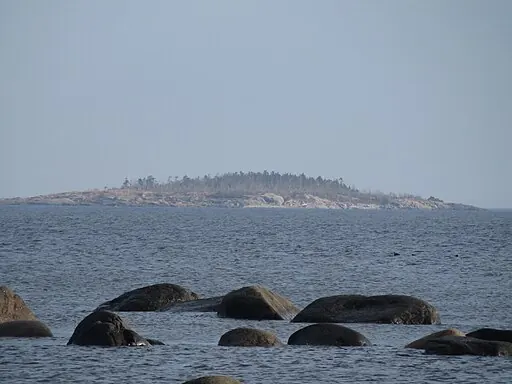
The tragedy of Egg Island dates back to August 22, 1711, when British Admiral Sir Hovenden Walker, en route to conquer Quebec, saw his fleet struck by a violent storm in the Gulf of St. Lawrence. Several ships were wrecked on the island's reefs, resulting in the deaths of hundreds of sailors and, according to legend, Walker's fiancée herself. This maritime disaster, marked by chaos and loss, left an indelible mark on the region, fueling tales of ghosts and apparitions that still haunt the island's mist each year.
Pointe-aux-Anglais
Since the tragic fate of Admiral Walker, who lost several ships near Egg Island on August 22, 1711, a ghost has appeared each year on foggy nights, accompanied by sinister cries. This otherworldly figure is said to be Walker himself, returning to lay flowers on the grave of his fiancée, who drowned during the shipwreck.
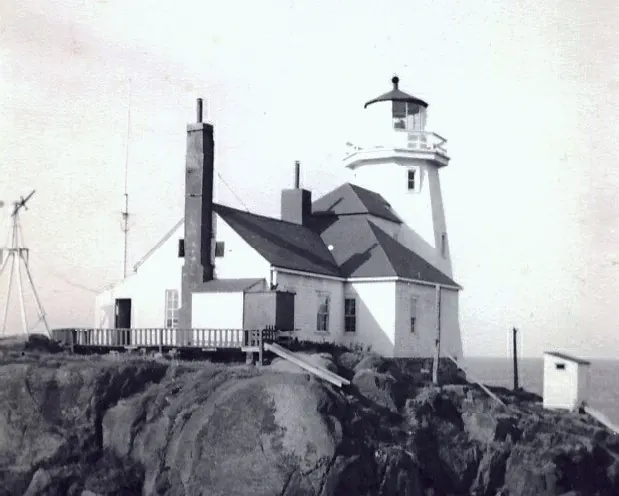
It was at this very spot, in 1863, that a marine inspector, while searching for a wrecked vessel, experienced a deeply unsettling adventure. As he traveled by boat with two Indigenous companions and darkness began to fall, they decided to follow the shoreline to avoid getting lost at sea. But as the night grew darker, the inspector told the others they would go ashore and camp for the night. The Indigenous men immediately objected, saying the place was unsuitable and that they preferred to remain on the water until daylight.
The inspector, however, insisted and leapt onto the shore of Egg Island, gathering driftwood to build a fire. Once the wood began to blaze and crackle, he searched for a large log that would burn slowly through the night while he slept wrapped in a blanket.
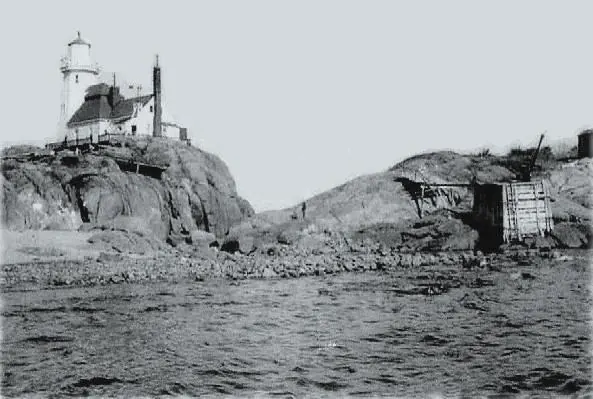
In the darkness, he bent down to pick up a dry piece of trunk, only to realize he was standing on a mound marked by a cross. Undeterred by the ghost stories and tales of phantom ships he had heard about the island, he grabbed the log anyway. But as he stood up, terror gripped him—a large, sinister white hand rose before him, threatening. He dropped the log and jumped back in fright. At that moment, the apparition vanished.
Proud and defiant, he stepped forward again to retrieve the log—but the white hand lunged toward him once more. Paralyzed by fear, he fell to his knees, trembling. Suddenly, he sighed in relief; his campfire now illuminated the area enough for him to understand what was happening. When he bent down to grab the log, his body no longer blocked the firelight, which now shone on an old uprooted pine lying beside the grave. Its dry, ghostly branches seemed to move as the flickering flames danced across them.
Egg Island, Côte-Nord · Coastal Legacies
La tragédie de l'île aux Œufs remonte au 22 août 1711, lorsque l'amiral britannique Sir Hovenden Walker, en route pour conquérir Québec, vit sa flotte frappée par une violente tempête dans le golfe du Saint-Laurent. Plusieurs navires s'échouèrent sur les récifs de l'île, causant la mort de centaines de marins et, selon la légende, de la fiancée de Walker elle-même. Ce désastre maritime, marqué par le chaos et la perte, a laissé une empreinte indélébile sur la région, nourrissant les récits de fantômes et d'apparitions qui hantent encore les brumes de l'île chaque année.
Pointe-aux-Anglais
Depuis la triste aventure de l'amiral Walker qui perdit des navires sur l'île aux Œufs le 22 du mois d'août 1711, on voit chaque année, par soir de brouillard, apparaître un fantôme au milieu de clameurs sinistres. Ce personnage d'un autre monde serait Walker ; il vient déposer des fleurs sur la tombe de sa fiancée noyée lors du naufrage.
C'est à cet endroit, en 1863, qu'un inspecteur de marine, alors qu'il cherchait un navire naufragé, allait vivre une aventure bouleversante. Comme il était sur l'eau accompagné de deux Amérindiens et que l'obscurité se répandit, ils décidèrent de longer le rivage pour éviter de se perdre en mer. Mais, comme il faisait de plus en plus noir, l'inspecteur annonça aux Amérindiens qu'ils allaient descendre à terre et camper pour la nuit. Aussitôt, les Amérindiens s'objectèrent, disant que les lieux ne leur convenaient pas et qu'ils attendraient plutôt le jour en demeurant sur l'eau dans la barque.
L'inspecteur en fit donc à sa tête, et d'un saut, il débarqua sur le rivage de l'île aux Œufs où il ramassa du bois de grève pour allumer un feu. Dès que le bois se mit à flamber et à pétiller, il essaya de trouver une grosse bûche qui se consumerait lentement pendant tout le temps qu'il dormirait enroulé dans une couverture.
Finalement, dans la noirceur, il se baissa pour ramasser un bout de tronc sec, mais il s'aperçut qu'il marchait sur un tertre sur lequel une croix se dressait. Hardi malgré toutes les histoires de revenants et de bateaux fantômes qu'il avait entendues à propos de l'île, il s'empara quand même de la bûche. Au moment où il se relevait, la terreur le saisit ; une grande main blanche sinistre se dressait devant lui, menaçante. Aussitôt, il lâcha la bûche et bondit sur ses pieds en reculant de quelques pas. Au même moment, l'apparition s'évanouit.
Orgueilleux, il avança et se pencha à nouveau pour saisir la bûche ; mais la grande main blanche s'élança encore vers lui. Pris de peur, il tomba genoux qui s'entrechoquaient. Soudain, il poussa un soupir de soulagement ; son feu de camp éclairait suffisamment les alentours pour qu'il puisse comprendre ce qui lui arrivait. Lorsqu'il se baissait pour saisir la bûche de bois, son corps n'obstruait plus l'éclat de son feu qui frappait alors sur un vieux pin déraciné reposant juste à côté de la tombe. Les branches sèches aux allures fantomatiques semblaient alors se mettre en mouvement à mesure que son corps laissait passer les lueurs du brasier.
Île aux Œufs, Côte-Nord · Coastal Legacies